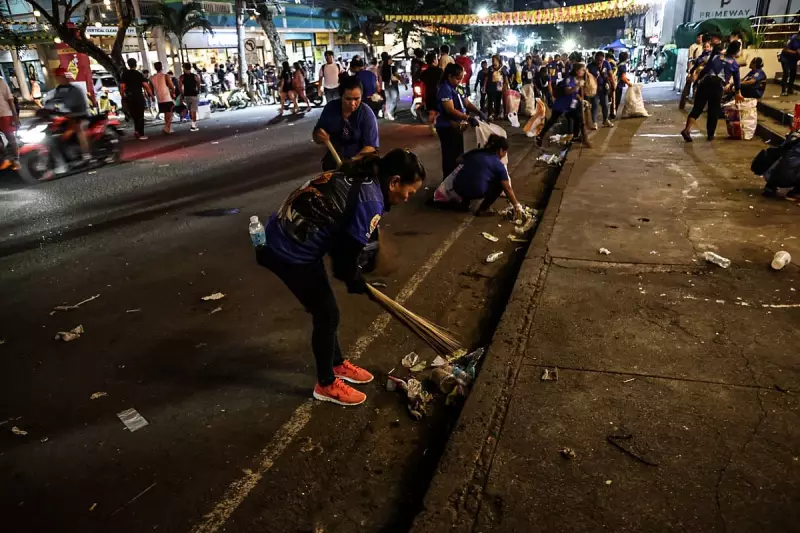
Sanitation crews in Cebu City undertook a massive cleanup operation, collecting a staggering 1,000 tons of waste from the streets following the conclusion of the Sinulog Grand Parade on Sunday, January 18, 2026. The cleanup began mere hours after the festivities ended, tackling the immense volume of debris left by millions of revelers.
Record-Breaking Crowd, Mounting Trash
Mayor Nestor Archival directly linked the extraordinary amount of garbage to the historic size of the crowd. The City Disaster Risk Reduction and Management Office estimated that 5.2 million people attended this year's event, surpassing last year's numbers. Archival noted that while the city's daily garbage collection typically ranges from 500 to 600 tons, the Sinulog celebration effectively doubled that figure.
This surge occurred despite city-wide campaigns encouraging proper waste disposal. Street sweepers were deployed to clear significant accumulations of plastic and other debris along major thoroughfares used for the parade, including P. Del Rosario St., Osmeña Blvd., General Maxilom Ave., and Imus Ave.

Coordinated Cleanup and Swift Results
The monumental task of restoring the city was achieved through a coordinated effort involving multiple agencies. The Department of Public Services, the Barangay Enforcement Office, septage teams, and the Emergency Environmental Response Team all worked together. Thanks to their round-the-clock work, major roads and parade routes were cleared by early Monday, January 19.
In a notable move toward sustainability, the city implemented improved waste handling practices. Plastic bottles were segregated at the source and sent to a transfer station instead of being dumped directly into landfills. Furthermore, the City's shredding machine has been relocated to the Carbon Public Market to support composting initiatives and help reduce local waste volume.
Planning for a Cleaner Future Sinulog
Looking ahead to the 2027 festival, Mayor Archival stated the city is already exploring new strategies to enhance waste management. One proposal under consideration is to require each festival contingent to form its own dedicated cleanup team, promoting accountability among participants.
On a broader scale, Archival has made a request to the National Government to provide a shredder for every barangay. If the units are not available in government stocks, he has proposed allowing barangays to use a portion of their financial assistance to procure the machines themselves, aiming to decentralize and improve waste processing capacity across the city.