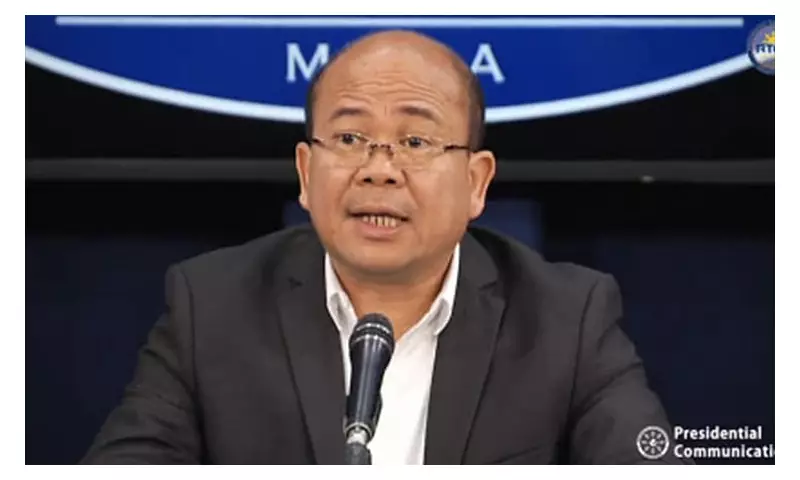
The Department of Budget and Management (DBM) has announced a significant policy shift aimed at depoliticizing government aid. Acting Secretary Rolly Toledo revealed on Saturday, January 10, 2026, that the newly enacted 2026 national budget explicitly bars politicians from involving themselves in the distribution of cash assistance to citizens.
What the New Law Specifically Prohibits
This prohibition is enshrined as a special provision within Republic Act (RA) 12314, the P6.793 trillion General Appropriations Act (GAA) for 2026. The law's Section 19 mandates that all distribution of financial aid must be carried out exclusively by authorized government personnel or accredited partners.
The provision leaves no room for ambiguity. It states: "No public officials holding elective positions, electoral candidates, politicians, political partners, or any of their representatives, except for officials having direct administrative and executive authority over the implementing agency, shall influence, be present in, participate in, or take part in the actual distribution of any cash assistance and other forms of financial aid."

Key Government Programs Covered by the Ban
During a radio interview, Secretary Toledo clarified that this sweeping ban applies to major national assistance programs. This is to ensure that aid reaches beneficiaries based on need, not political consideration.
The affected programs include:
- DSWD's Assistance to Individuals in Crisis Situation (AICS) and other protective services.
- DOLE's Tulong Panghanapbuhay sa Ating Disadvantaged/Displaced Workers (TUPAD) program.
- DOH's Medical Assistance for Indigent and Financially Incapacitated Patients.
The law also extends beyond mere presence. It forbids the display of political signage, branding, paraphernalia, or any related political activity within the distribution area itself.
Ensuring Compliance and Upholding Integrity
Secretary Toledo emphasized that this rule acts as a crucial safeguard to prevent the politicization of public funds and to ensure that government assistance maintains its integrity. The objective is to separate the essential function of social aid from political campaigning and influence.
To enforce this policy, the 2026 GAA mandates all national government agencies to establish strict requirements and protocols. Furthermore, oversight responsibility is given to the Joint Congressional Committee on Public Expenditures, which will monitor agency compliance.
This move represents a concrete step towards insulating critical social safety nets from political interference, aiming for a more transparent and equitable distribution of government resources to the Filipino people.