The unexpected death of a high-ranking government official who had recently questioned multi-billion peso infrastructure projects has sent shockwaves through the Philippines, reigniting critical conversations about accountability, whistleblower safety, and the integrity of public funds.
A Career Cut Short Amidst Scrutiny
Maria Catalina "Cathy" Estemo Cabral was not an ordinary bureaucrat. As an Undersecretary at the Department of Public Works and Highways (DPWH), she held a pivotal role in policy-making, procurement, and fund management. Her position placed her at the heart of a system where billions of pesos for infrastructure could either materialize into real roads and bridges for the people or remain as mere entries on paper.
Cabral's name entered the national discourse when she publicly raised pointed questions regarding the alleged P51 billion worth of infrastructure projects in Davao. This move brought her and the massive funding under intense scrutiny.

A Tragic and Sudden End in Benguet
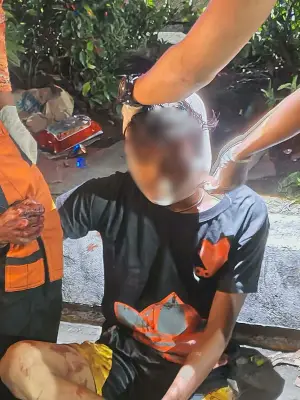
Months later, the nation was stunned by the news of her untimely death. Cabral, along with her driver, died in an incident near the Bued River along Kenon Road in Sitio Maramal, Barangay Camp 4, Tuba, Benguet. Initial reports from authorities classified the event as an accident, stating that no legal evidence currently suggests foul play.
However, the context of her passing casts a long shadow. In the Philippines' historical narrative, individuals who raise alarms on potential irregularities have often faced threats, been silenced, or met with misfortune. This backdrop inevitably colors public perception, transforming a personal tragedy into a symbol of systemic risk.
Education, Service, and Systemic Failure
Cabral's distinguished educational and professional background adds a layer of profound irony to the story. She was highly educated and a long-serving government official. Her case underscores a painful truth: knowledge and expertise are not automatic guarantees of accountability or protection. They can be powerful tools for reform, but they can also become shields for flawed structures.
This is not a judgment on Cabral as an individual, but rather a critique of the system she served. When highly qualified officials voice concerns over potential irregularities and the institutions remain silent, it reveals that the core problem is not a lack of knowledge, but a lack of will to act.
The controversy surrounding the P51 billion Davao infrastructure funds transcends mere financial audit. It poses fundamental questions: Can truth survive within the bureaucracy? Is there still room for courage and integrity in public service? And is speaking the truth an act of genuine service, or does it represent an unacceptable risk in a system that has yet to fully prove it can protect those who challenge it from within?
The death of Undersecretary Cathy Cabral leaves these questions hanging, unanswered, demanding a response not just from the DPWH, but from the entire apparatus of Philippine governance.