
Philippines pursues reforms for economic resilience and growth
The Philippine government is implementing reforms to strengthen economic resilience and sustain inclusive growth amid global uncertainties, DepDev Secretary Arsenio Balisacan said.


The Philippine government is implementing reforms to strengthen economic resilience and sustain inclusive growth amid global uncertainties, DepDev Secretary Arsenio Balisacan said.

A business group executive says full implementation of industrial policy measures will strengthen the Philippine economy as the Strait of Hormuz reopens after a US-Iran peace deal.
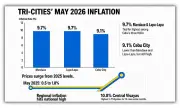
Lapu-Lapu and Mandaue cities recorded a 9.7% inflation rate in May 2026, the highest among Cebu's three highly urbanized cities. Cebu City had 9.1%, and Central Visayas led the nation at 10.8% for the 10th straight month.

Stephen CuUnjieng says the Philippines must break underinvestment cycle, rebuild manufacturing, and invest in infrastructure and education for sustainable growth.

Shared lists with real-time sync. No signup needed — just open and shop together.
Recommended
The DOTr and Cebu Province launch the Tabang PangByahe program, allocating P20 million to subsidize bus operations and ensure regular trips despite high fuel costs.

The driver of an SUV involved in a hit-and-run that injured an HPG officer on SLEX has surrendered. The 21-year-old Filipino-Indian cited panic after accidentally hitting the officer.

Economists from UA&P say the Philippines must attract $15-20 billion in annual FDI, matching Vietnam, to sustain 8% economic growth and reach first-world status.

Philippine inflation slowed to 6.8% in May 2026 from 7.2% in April, driven by lower transport and food costs, but rice and electricity prices remain high, keeping pressure on households.

Philippine inflation slowed to 6.8% in May from 7.2%, driven by lower transport costs and government interventions, despite elevated global oil prices.
Shared lists with real-time sync. No signup needed — just open and shop together.
Recommended
Central Visayas unemployment rose to 3.8% in 2025, with 115,000 jobless. Skills mismatch and disasters cited. Youth employment fell to 88.3%.

Davao Region's unemployment rate fell to 2.9% in 2025, with employment rising to 97.1%. Over 200 job seekers were hired on the spot during the Labor Day job fair.

Philippine businesses grew more pessimistic in April as the Middle East conflict raised concerns about inflation, costs, and spending. The confidence index fell to -35.8%.

BSP survey shows business confidence fell to negative 35.8% in April due to Middle East conflict, high oil prices, and inflation, though outlook improved.

The Civil Aeronautics Board reduces fuel surcharge from Level 15 to Level 13, effective June 1-15, 2026, providing slight relief for passengers.
Shared lists with real-time sync. No signup needed — just open and shop together.
Recommended
A student shares how inflation affects daily life, from commuting to meals, highlighting the financial and mental toll on learners.

Davao City recorded a 7.0% inflation rate in April 2026, the lowest in Davao Region, despite surging fuel prices and rising costs of basic commodities due to the global oil crisis.

A student writer argues that inflation in the Philippines goes beyond numbers, stripping away people's dignity and widening the gap between rich and poor.

The Bangko Sentral ng Pilipinas encourages businesses to adopt the Pera retirement savings program, offering tax deductions of up to 150% to boost employee retirement funds.

President Ferdinand Marcos Jr. is confident the economy will strengthen through aggressive investments, new incentives, and support for MSMEs to counter stagflation and global oil crisis.
Shared lists with real-time sync. No signup needed — just open and shop together.
Recommended
Join us LIVE on Beyond the Headlines as we discuss inflation, economic slowdown, and global conflicts' impact on Filipinos with expert Philip Tan.

Foreign investment approvals in Central Visayas rose 35.3% to P455.27 million in Q1 2026, but total investments dipped 1.3% amid weaker national commitments.

Cebu faces a critical challenge: moving beyond rapid but uneven growth toward genuine economic transformation through deeper capabilities and balanced regional development.

The Asian Development Bank pledges $1.75 billion in additional financing to support the Philippines amid economic shocks from the Middle East conflict.

The Maharlika Investment Corp. signed a P15-billion credit facility with Petron Corp. to boost fuel security, enabling Petron to increase crude oil inventory and manage fuel procurement.
Shared lists with real-time sync. No signup needed — just open and shop together.
Recommended
Inflation in Davao Region accelerated to 8.9% in April 2026, driven by soaring transport fares and rising food prices, exceeding the national rate of 7.2%.

Cebu province inflation rose to 12.9% in April 2026, driven by food, transport, and utilities. Food inflation hit 17.5%, with fish and vegetables surging. Lapu-Lapu City had the highest city rate at 11.4%.

SWS survey shows net personal optimism fell to +23 in March 2026, the lowest since September 2020, as high inflation and low incomes strain Filipino households.

Philippine FDI net inflows reached $590 million in February 2026, up from January but down year-on-year. US remained top source. BSP projects $7.5B for 2026.

Inflation in the Philippines continues to burden Filipinos as prices of basic goods, fuel, and transport rise. A call for sustainable government action.
Shared lists with real-time sync. No signup needed — just open and shop together.
Recommended
The Philippine financial system showed resilience in H2 2025, with banks' assets up 8.9% to P29.9T. Deposits and lending grew, while NPL ratio stayed manageable at 3.1%.
